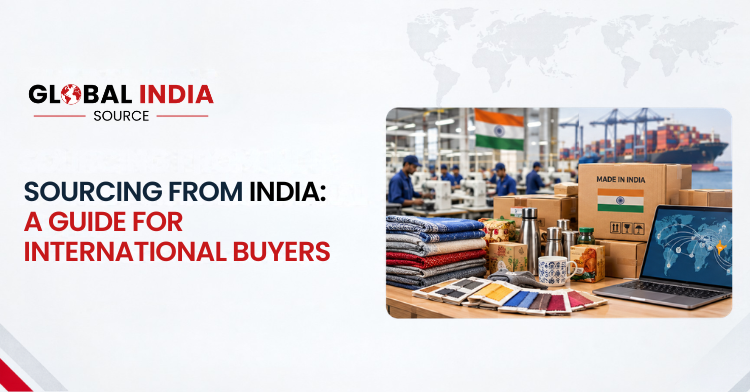
With its diversified manufacturing base and low prices, India is becoming an attractive sourcing destination for businesses that wish to take advantage of its manufacturing capabilities and sourcing products at competitive prices.
From garments and handicrafts to drugs, automotive parts, consumer electronics and engineering items, one can find many industries offering products to source from India.
But sourcing products from India requires you to not only find the right supplier but also evaluate them, compare prices, check quality of the products, know about export documents, choose shipping terms and handle international logistics.
This guide discusses everything about product sourcing from India, helping you create a reliable and affordable sourcing network.
Why Should You Source Products from India?
There are many reasons why international businesses should include India into their sourcing network.
Diverse Manufacturing Base
India has a well-established manufacturing base in many sectors such as textiles, apparels, leather goods, pharmaceuticals, chemicals, automotive components, machinery, furniture, handicrafts, food products, and others.
Competitive Manufacturing Costs
Depending on the product type, order quantity, material needs, and manufacturing requirements, India is capable of offering competitive manufacturing costs. Business entities can shop around for quotes from Indian manufacturers in order to find those that will meet their quality standards and cost parameters.
Hundreds of Suppliers
India boasts thousands of manufacturers, wholesalers, exporters, and niche suppliers. This gives foreign businesses a choice when searching for certain products or manufacturing capabilities.
Product Customization
Most suppliers in India collaborate with international buyers in respect of private label products, customized packaging and other product specifications.
Supplier Diversification
Companies that presently source heavily from one supplier market can opt to use India as another sourcing location. Sourcing diversification will help them reduce dependence on just one country/region for sourcing.
What Products Can You Source from India?
There are many product lines that you can source from India owing to its manufacturing and exporting diversity.
Some of the commonly sourced product types include:
- Textile and garments
- Household furnishings
- Leather products
- Handicrafts and home decorations
- Jewellery and accessories
- Agro/food products
- Pharmaceuticals
- Chemicals
- Automotive parts
- Engineering products
- Industrial machinery and equipment
- Packaging products
- Personal care products
- Furniture
- Consumer goods
The right category depends on your target market, product requirements, import regulations, expected order volume and budget.
Before approaching suppliers, clearly define the product specifications, materials, dimensions, quality requirements, packaging, certifications, and expected quantity.
How is the Product Sourcing Process in India Organized?
An organized sourcing process can aid in reducing delays, quality issues and unforeseen expenses.
The product sourcing process involves the following steps:
1. Specify the required product
Prepare a product specification sheet which will include such information as dimensions, material types, colours, performance characteristics, packaging, labels, certifications, etc.
2. Identify the suppliers
Find out the producers/exporters that specialize in your type of goods.
3. Compare the suppliers
Get quotations, Minimum Order Quantities (MOQs), production time frames, payment terms, certifications and samples from several suppliers.
4. Verify the suppliers
Examine the business registration certificates, production capacity, export experience, references, certifications, production sites if necessary.
5. Get samples
Evaluate the quality of the products and compare samples with your specification.
6. Discuss commercial conditions
Agree upon such issues as price, MOQ, payment terms, packaging, production schedule, terms of delivery and other conditions.
7. Issue a purchase order
After choosing the supplier, specify all requirements to the products in the PO/contract.
8. Control the production process
Arrange for the inspections or quality-control services if necessary.
9. Carry out the pre-shipment inspection
Make sure that the quantity, quality, packaging, labelling, documents are correct.
10. Arrange international shipping
Select the appropriate Incoterm, freight method, customs documentation and logistics provider.
How to Source Products from Indian Manufacturers and Suppliers
Searching for possible suppliers is the key step of sourcing products from India.
For international buyers there are a few ways to do it:
B2B Marketplace Websites
B2B marketplaces can help you find manufacturers and exporters in any product category. But the listing should not be considered evidence of reliability.
Industry Associations and Trade Organizations
Trade organizations can help you find well-known companies in certain industries.
Trade Fairs and Exhibitions
Trade fairs in India will give you a chance to contact the manufacturers, check the products, discuss customization options and build business relations.
Referrals and Business Network
References of your business partners, distributors, industry people or sourcing agencies can help you to find potential suppliers.
Manufacturer Search by Direct Research
You can look for the manufacturer according to such criteria as product category, manufacturing location, certification, export destinations and manufacturing capacity.
When evaluating Indian suppliers do not base your decision only on the lowest quotation. Other criteria such as manufacturing capacity, product consistency, communication, lead time, compliance and exporting experience are as important.
Verification of Indian Supplier Prior to Ordering
The verification of the supplier will be of great importance in minimizing any fraudulent actions, inferior product quality and shipping problems.
Before making your purchase order, think about verifying the following information:
- The registered business name
- Address and contact details of the company
- The manufacturing plant
- Years in business
- Product certifications
- Export experience
- References for international buyers
- Production capacity
- Quality control system
- Banking information and payments terms
- Shipping and exporting experience
For bigger purchases, you can consider doing the audit of the manufacturing plant or hiring an independent inspection service.
It is also important to begin by making the smaller order before deciding to buy in bulk.
Information About MOQ and Pricing in India
MOQ or Minimum Order Quantity, and it is the minimum number of products that the supplier is ready to produce or sell in one single order.
Minimum Order Quantity may differ greatly depending on such factors as:
- Product type
- Raw material needs
- Production process
- Customization
- Packaging
- Production capacity
- Purchase order size
In case of customization, it is possible that the supplier will need more orders than for standard products.
When comparing quotations, consider the landed cost rather than the unit price, which will include the following:
Product Cost + Packaging + Inland Transportation + Inspection + Freight + Insurance + Customs Duties + Taxes + Other Charges
The supplier who offers you the lowest unit price may not be giving you the lowest landed cost.
Managing Product Samples Prior to Production in Bulk
Product samples enable the buyer to judge the ability of the supplier to produce according to specification prior to ordering production in bulk.
When asking for product samples, give the supplier detailed instructions concerning the following:
- Materials
- Dimensions
- Colours
- Design
- Functional Requirements
- Packaging
- Labelling
- Tolerances
- Testing Requirements
On receipt of the sample, compare it with the specifications agreed upon.
Where any alterations need to be made, make sure you give them in writing and ask for another sample before production in bulk.
In case of custom-made products, the approved sample can serve as an important reference point in quality inspection.
Quality Control When Sourcing Products From India
International sourcing involves quality control because discovering quality issues after the goods have been shipped can prove very costly to solve.
A systematic process of inspection helps one to discover defects during various phases of manufacture.
Pre-Production Inspection
Pre-production inspection can be conducted prior to or at the start of the manufacturing process.
It could include an inspection of:
- Raw materials
- Production equipment
- Specifications of the product
- Packaging material
- Production plan
- Suppliers’ preparedness
Its purpose is to detect problems before starting full production.
During-Production Inspection
During-production inspections allow buyers to detect defects in the process of manufacturing.
Inspection could include:
- Dimensions of the products
- Material quality
- Workmanship
- Quality of production
- Defect rate
- Colour consistency
- Packaging
- Production progress
Detecting defects in the process of production gives buyers the chance to solve them prior to completing the whole order.
Pre-Shipment Inspection
Pre-shipment inspection can be carried out after completing production and prior to shipment.
It could verify:
- Quantity
- Specifications of products
- Workmanship
- Packaging
- Labelling
- Condition of cartons
- Defects levels
This gives buyers one more opportunity to ensure the quality of the goods prior to shipping them from India.
Why AQL Standards Are Important
AQL (Acceptable Quality Limit) is the sampling inspection system widely used in product inspection.
Rather than inspecting each item individually, inspectors inspect the sample from the shipment and classify defects according to established standards.
Quality Issues that Need to be Checked by International Buyers
Depending upon the products, the following quality issues need to be checked:
- Mismeasurement
- Material differences
- Colour variations
- Defective stitching or finishing
- Surface defects
- Damaged or broken parts
- Labelling mistakes
- Packaging mistakes
- Missing accessories
- Functional defects
The checklist needs to be custom made for the product.
Compliance Issues for Indian Exporters to International Markets
International consignment will require proper documentation and exporting compliances.
Depending upon the nature of the products and destinations, the following documents may be included:
- Commercial Invoice
- Packing List
- Shipping Bill
- Bill of Lading/Air Waybill
- Certificate of Origin
- Insurance document if required
- Product specific certificate
- Inspection certificate if required
- Import/Export related documents
This requirement may depend upon the product, country of destination, mode of transport and regulatory requirements.
The Indian exporter and international buyer both must confirm about the documents requirement before dispatching the consignment.
Choosing the Right Incoterm for India Sourcing
Incoterms cover the transportation, costs, insurance, delivery and risks between the parties involved.
Three Incoterms often mentioned in international sourcing discussions are FOB, CIF and DDP.
FOB — Free on Board
When it comes to FOB, the seller covers costs and risks until the shipment is delivered onboard at the designated port of loading.
Beyond that point, the buyer generally takes care of the principal transportation and other costs and risks as per the agreement.
In FOB transactions, the buyers generally have good relationships with freight forwarders and more control over international transportations.
CIF — Cost, Insurance and Freight
In case of CIF, the seller is responsible for arranging the cost of transportation and insurance up to the designated port of destination.
The buyer is responsible for clearance, duties and any deliveries beyond the port of destination.
For buyers, CIF makes the transportation easier initially, but buyers need to know the costs covered and not covered under CIF.
DDP — Delivered Duty Paid
DDP means that the seller will be responsible for delivering the goods to the destination including import duties and many other import requirements.
Incoterm Selection
Take into account:
- Import experience
- Regulations of the destination country
- Degree of control over the freight
- Customs regulations
- Landed cost
- Supplier capability
- Presence of a freight forwarder
- Insurance conditions
It is essential always to agree upon Incoterm, its name and obligations in the purchase contract.
Shipping Products from India to International Markets
After products are manufactured, international buyers should arrange shipping from the Indian manufacturer to the destination country.
Possible methods of transport are:
Sea Transport
The sea mode of transport is widely used for bulk shipments and usually provides lower cost of transport per unit. The time of transit is longer.
Air Transport
It is suitable for urgent shipments, high-value products or relatively small consignments.
Courier Service
Courier services may be helpful when shipping samples and documentation.
Choosing a mode of transport depends on volume, weight, destination, terms of delivery and urgency.
Potential Problems in Sourcing from India and Ways to Solve Them
There are some challenges that international buyers may face when dealing with overseas suppliers.
Unreliable Product Quality
How to solve it: Detailed specifications, approved samples, inspection checklists and third-party inspections.
Gaps in Communication
Solution: Ensure that all specifications, prices, timing and quality needs are documented in writing.
Unexpected Costs
Solution: Determine the full landed costs rather than relying solely on comparison of supplier quotes for product price.
Production Delays
Solution: Set realistic schedules for production and follow up.
Documentation Errors
Solution: Clarify the export and import document needs before production and shipment.
Dependency on Suppliers
Solution: Look for alternative suppliers and evaluate the sourcing market periodically.
Payment Problems
Solution: Adopt appropriate payment systems and carry out due diligence before making payments.
How to Develop Long-Term Relationships with Indian Suppliers
Having a reliable supplier can form part of your supply chain.
Developing long-term relationship involves:
- Specifying products properly.
- Making payments according to the terms agreed upon.
- Giving prompt feedback.
- Establishing realistic production schedules.
- Addressing quality problems professionally.
- Providing future demand forecasts when possible.
- Evaluating performance.
- Not altering specifications without proper communication.
- Adopting appropriate documentation.
Long-term relationships will also help suppliers understand your quality and production requirements.
When Should You Work With an Indian Sourcing Company?
An Indian sourcing company can assist the international buyers who lack local presence or knowledge about manufacturing in India.
The services that the sourcing company might provide include:
- Finding suppliers
- Checking suppliers
- Negotiating prices
- Obtaining samples
- Inspections
- Monitoring production
- Handling documentation
- Shipping assistance
It is especially helpful when the buyer is new to the industry or ordering complicated goods or customized products.
Nevertheless, the buyer should consider carefully the experience, fee, suppliers’ network, quality control and transparency of the sourcing company.
Steps to Ensure Successful Product Sourcing from India
Adhere to the following strategies to ensure an efficient sourcing process:
- Establish clear product specifications.
- Conduct research on various manufacturers in India before settling on any.
- Compare landed costs rather than the unit cost of production.
- Validate the suppliers prior to making big purchases.
- Ensure that you ask for samples before purchasing new products.
- Specify product specifications and business terms.
- Perform inspections for qualified orders.
- Determine the right Incoterm.
- Determine the requirements for export and import documents.
- Begin with small orders when dealing with new suppliers.
- Always have backups for critical products.
Conclusion
Procuring products from India offers various benefits for foreign companies in the form of diversity of products, reasonable prices and good manufacturing infrastructure. Nevertheless, to successfully engage in sourcing from India, one must undertake supplier verification, product assessment, cost estimation and correct logistics procedures.
A selection of reliable Indian manufacturers and suppliers will help to achieve this objective.
FAQs
How do I source products from India?
One could source products from India through identification of the right suppliers/manufacturers, comparing quotes, confirming the reliability of the supplier, requesting for samples, specifying the requirements and conditions of supply, inspecting the quality and organizing international shipping of the products.
What would be the ideal products to procure from India?
There are various products that are common such as the products made from textiles, apparels, leather goods, handicrafts, jewellery, pharmaceutical products, chemicals, automobile components, engineering products, furniture and foods among others depending on the target market.
How can I find the ideal manufacturers in India?
The various ways of finding manufacturers include use of B2B websites, exhibitions, trade shows, business networking, referrals, even research. Before making an order from the suppliers, it is important to verify their credentials.
What is the minimum order quantity when sourcing from India?
MOQ is determined by different factors which include supplier and product. While standard products can have low MOQ, customized products will have high MOQ because of the requirements of raw materials and packaging among others.
How do I verify the supplier in India?
Verification of a supplier may involve checking their registration details as a business entity, physical address of the company, manufacturing facilities, certification, export experience, production capacity among others.