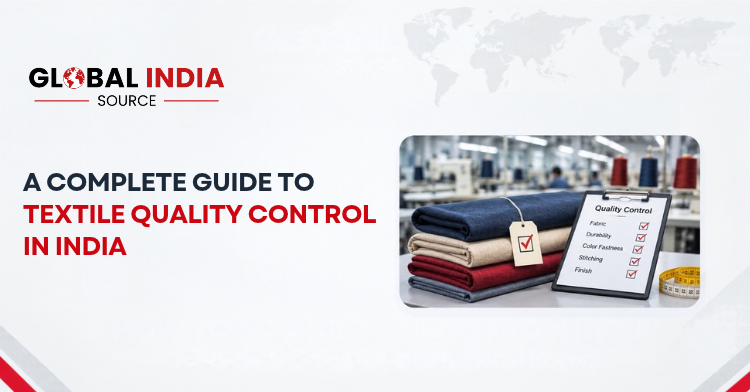
India is well known for its textile and garment industry, supplying fabrics, garments and home textile to global buyers. Maintaining a high level of quality throughout the production process is just as important.
A fabric may appear perfect but once it has been washed, it may begin to change colours. In addition, a garment may be the correct size but have poor stitching and finishing issues, leading to:
- Orders being rejected.
- Returns.
- Unnecessary costs.
- Unhappy customers.
With the help of textile quality control in India, manufacturers can ensure their product is free from any defects and meets the required textile specifications and quality standards.
Having a quality control process in place will ensure a consistent standard is met from raw materials to the final garment.
Within this blog we will look at the importance of textile quality control, inspection stages, common fabric issues, testing and how to choose an reliable quality control company in India.
What is Textile Quality Control?
Textile quality control is the process of inspecting, testing and analysing textiles and garments to ensure they meet specific quality standards throughout the manufacturing process. From raw material selection through to final products ready for dispatch.
It ensures any defects are identified and the products meet the required specifications.
For example, if a manufacturer is making cotton shirts, they need to ensure the fabric is the right colour, texture, strong and the correct composition. The shirts should also be the correct size, with good stitching and finishing.
A standard textile quality control process includes:
- Raw Material Inspection – Fibre, yarn, dye and other materials are inspected.
- Fabric Inspection – Holes, stains, uneven dye and weaving issues are identified.
- Production – Cutting, stitching and other processes are checked.
- Garment Inspection – The size, seams, finishing and appearance are checked.
- Testing – Fabric is tested to ensure it is strong, colours don’t run, doesn’t shrink and maintains its shape.
This will help manufacturers to ensure any issues are picked up and the final products meet the buyer’s expectation.
Why Is Quality Control Important In The Textile Industry?
Throughout the textile manufacturing industry there are numerous processes, and this means that mistakes can be made and affect the quality of the textiles. If textiles aren’t inspected correctly, issues can occur that go unnoticed until they reach customers.
Below I’ve listed a few key reasons why quality control is important in the textile industry.
1. Uniform Product Quality
When ordering products all products should be consistent in relation to colour, texture, size and final finish. Issues can occur when one fabric roll isn’t the same as another, or within the batch.
Having regular quality control checks in place will make sure that any differences are noted and that your products remain consistent with the samples approved.
2. Reduce Costs During Manufacturing
If fabrics or garments are found to have issues then reworking, replacing or disposing of them can become costly. If issues have been missed until the complete order is complete.
By carrying quality checks during manufacturing problems can be identified at an early stage and reduce any waste to materials, reworking and extra costs.
3. Helps Ensure The Products Meets Buyers Needs
Often international buyers will have specific requirements for the fabrics. This can be related to the composition of the fabric, colour, durability and sizing. Some products may also require compliance with chemical safety checks, labelling and other regulations.
By having an effective textile quality control method in place you as a manufacturer can make sure your products are meeting the specification requirements.
4. Increase Customer Satisfaction
Customers will expect garments and textiles to work as they say they will. If there are issues with the colours fading, too much shrinkage, poor stitching and incorrect sizing this can result in complaints and causing returns.
Having good quality control in place will help reduce these issues.
5. Maintain A Good Company Reputation
Repeated issues with quality can cause issues with buyers for a textile manufacturer/exporter. By ensuring your products are consistent in quality you will help create trust with your company, keep a good reputation and create long term partnerships.
Key Stages For Textile Quality Inspection
When quality inspecting textiles it’s important that we don’t just check the end products. Textiles should be checked throughout the process to ensure any issues are highlighted.
There are four key stages of textile quality inspection.
1. Raw Materials
This is the first step of maintaining the quality of your product. Inspectors will check the fabrics fibres, yarns, dyes and other materials before manufacture.
Key parts that will be checked include:
- Fibres – Length, strength, clean and consistent.
- Yarns – Thickness, twist, strength and consistency.
- Materials – Percentage of cotton, polyester, viscose or other fibres.
- Dyes – Ensuring the colours are accurate.
By checking the raw materials you can help ensure no defects will occur due to poor quality materials.
2. Fabric Inspection
During fabric inspection the fabric rolls will be checked for any obvious issues.
Issues that will generally be looked for include:
- Holes/tears.
- Uneven dyeing.
- Broken yarns.
- Oiling.
- Incorrect width, length and weight.
Manufacturers may use a 4 point fabric inspection system to identify any issues with the fabric and if the fabric roll is acceptable.
3. In Process Checks
During in process checks textiles will be checked whilst they’re being made. This will help ensure that all stages are meeting the requirements.
Garments may be checked for:
- Correct cutting.
- Stitching is correct, seams strong and threads tight.
- Buttons, zips and accessories are in the correct place.
- Correct garment sizing.
- Any finishing issues and alignment issues.
By regularly checking products are being made correctly you can help fix any issues.
4. Finish Garment Inspection
This is the last stage of garment inspection. It will ensure that the finished products are ready to package.
Points that will generally be checked include:
- Length of garment matching the approved sizing.
- Stitching, buttons, zips and fastenings.
- Any staining, holes, loose threads or damaged fabric.
- Colours are consistent and the garment looks good.
- Labelling, tagging and packaging.
- Quantity and product.
This helps to make sure that no defective garments are sent to your buyers.
Common Fabric Faults
Fabric faults can be caused during the spinning, weaving, knitting, dyeing, finishing process or even just mishandling. Some will be easy to spot by eye, whilst others will require professional fault checking.
There are 4 common fabric faults you should be aware of:
1. Colour Variation
This is when you have variation in colour within different parts of the fabric or between different batches.
This can occur due to issues such as uneven dyeing, incorrect dye amount or uneven processing.
To identify this, fabric inspectors will compare colours when using the correct lighting to match against approved samples.
2. Shrinkage
Shrinkage is when a fabric lose size after being washed, dried or heated or exposed to moisture. This is common in cotton fabrics but can occur on many fabric types.
If the fabric shrinks too much it can cause an issue with the fit, sizing and practicality of garments.
To identify this, you can carry out fabric shrinkage testing to see how much the fabric has reduced in size, after being washed and dried following specific guidelines.
3. Weaving Faults
Weaving faults occur when the warp and weft yarns are not woven through correctly.
Common Weaving Faults are:
- Broken Ends – Warp yarns missing or broken.
- Broken Picks – Weft yarns missing.
- Slubs – Thick or irregular yarn areas.
- Reed Marks – Visible lines caused by uneven warp yarns.
- Float Faults – Warp/Weft yarns going over more threads than they should.
To identify this, fabric inspectors will look for any irregular patterns, missing yarns and visible fabric faults.
4. Stains & Holes
Some of the most obvious fabric faults will be staining or holes. Staining can occur due to oil, dirt, chemicals or mishandling. Holes can occur due to faulty machinery or broken yarn.
This can make the fabric unusable.
To identify this, fabric inspectors look at the fabric surface using the correct lighting to spot any staining, cutting, holes or other visible damage.
Testing for Quality in Textiles
Visual checks can be done to identify any fabric faults on the surface of the material but some features cannot be checked visually such as strength, colour and shrinking. Carrying out fabric quality testing will allow manufacturers to know how the materials will behave in certain situations and if they will fit the required standards.
1. Fabric Strength Testing
Fabric strength testing will allow you to see how strong the fabric is and how much force it can take before it breaks. This will help decide if the fabric will be suitable for the item it is going to be used for.
Test common used for fabric strength are:
- Tensile – How much force is needed to break the fabric.
- Tear – How tear resistant the fabric is.
- Seam Strength – How strong the stitched seams are.
This can be useful to know for garments, upholstery, home textiles and industrial fabrics.
2. Colour Fastness Testing
Colour fastness testing will allow you to see if the fabric will keep its original colour when exposed to external factors.
Common tests to carried out are:
- Washing – To see if the fabric loses any colour or transfers dye.
- Rubbing – How much colour is transferred when rubbing.
- Perspiration – How the fabric reacts when exposed to artificial sweat.
- Light Fastness – How well the colour holds up to light.
This is particularly important for garments and home textiles which will be frequently used and washed.
3. Fabric Shrinkage Testing
Fabric shrinkage testing will let you know how much the fabric has changed in size after being washed and dried.
A sample of fabric will be marked and measured before applying the washing and drying process. The fabric will then be measured again to calculate how much it has shrunk.
This will allow manufacturers to know if the fabric will keep its expected size after being washed.
4. Dimensional Stability Testing
Dimensional stability testing will allow you to see if your fabric keeps its original measurements when exposed to factors such as washing, drying, heating and moisture.
This will help identify if the fabric is shrinking, stretching or distorting in an undesired way.
This is particularly important for items such as shirts, trousers, uniforms and home textile items as they need to keep their correct measurements.
How to Choose a Textile Quality Control Company in India?
Choosing the correct inspection service provider is very important for textile manufacturers, garment exporters, suppliers and global buyers. Choosing a reliable quality control will ensure defects are highlighted, the quality of your products can be confirmed and reduce the possibility of receiving or sending poor quality products.
Here are a few points to consider when choosing a textile quality control service in India.
1. Industry Experience
Ensure that the company has experience within the textile & garment manufacturing industry. Every material and product will have different quality requirements. The team providing inspection services should have an understanding of different types of fabric, garment construction and what common defects can occur.
2. Range of Inspection Services
A good quality inspection company should provide a range of inspection services throughout the manufacturing process such as:
- Raw Material Inspection
- Fabric Quality Inspection
- In Process Inspection
- Pre-Shipment Inspection
- Final Random Inspection
- Packaging & Labelling Inspection
Having a range of inspection services will make ensuring quality much easier.
3. Testing & Standards
Ensure you know what testing methods and standards they follow. Depending on the type of product, there will be recognised standards & methods used when testing textiles such as ISO, ASTM, AATCC & BIS.
You should also know if they perform the testing themselves or if they send it to another laboratory. They should also hold the correct accreditation.
4. Inspection Reports
The reports should give detailed information of the condition of your products.
A reliable company should provide detailed reports including:
- Details of the products being inspected.
- Testing methods and results.
- Photos of any defects found.
- Whether they meet the buyers specification.
- Final inspection results and recommendations.
This will allow you to make informed decisions.
5. Range of Inspections & Timeframes
If you have multiple suppliers/manufacturing units to inspect ensure they can visit multiple locations within India.
You should also know what their timeframes are for inspections and reporting. Having quick timeframes will ensure any issues are picked up without delaying production/shipments.
6. Cost & Value for Money
Depending on what type of product you are inspecting, where it is located, how many you have, what testing is required and the overall work required there may be different costs.
Rather than just choosing the cheapest option, look at what experience they have, technical ability, range of inspections and quality of reporting.
Having a reliable inspection partner will help avoid any costly rejections, reworks and loss from shipments.
Conclusion
It is very important that textile manufacturers and garment exporters ensure consistent products. This can be done by putting processes in place to ensure that raw materials are inspected, and textiles and clothing are tested.
Having a structured textiles quality control process in India will help you identify any defects, reduce losses in production, meet buyer expectations and ensure industry standards are met.
By working with an experienced inspection partner this can be made more reliable for manufacturers and international buyers. By using the correct inspection methods, testing and quality assurance you can provide improved products and build long term relationships.
FAQs
What is textile quality control?
Textiles quality control is the inspection and testing of textiles and clothing to ensure that they are of a certain standard. It ensures that defects can be identified, quality standards can be maintained, less wastage is created and there is increased customer satisfaction.
What are common quality issues when it comes to textiles?
Some common issues that you will find in textiles include: Colour variations, Shrinkage, Holes, Stains, Broken threads, Pilling, Lumps & Unevenness. This can occur at various stages throughout the production process including: Spinning, Weaving, Knitting, Dyeing, Finishing & Handling.
What are some common textile tests?
Some common textiles tests include: Tensile strength, Tear strength, Colourfastness, Shrinkage, Dimensional stability & Seam strength. Depending on what fabric you are using, how it will be used and what your buyer requires will determine what tests will be undertaken.
What standards should Indian textile manufacturers follow?
Depending on what your textile products are and who your target market is, you should follow relevant standards including: BIS Standards, ISO Standards, ASTM Testing & AATCC Testing. If you are exporting your textiles then you may have specific requirements depending on where you are exporting to relating to chemicals, fibre content & labelling.
How can international buyers ensure the quality of fabric being imported from India?
International buyers can ensure quality by ensuring they have verified suppliers, checking the material specification, requesting samples and having an independent inspection. You can also have testing done on the fabric, in-process inspection & pre-shipment inspection.
Why should I use a textile quality inspection company in India?
Having an independent inspection on your textiles will help you identify any defects within the fabric and ensure that they are to the correct standards. This can help ensure consistent quality and ensure you are not receiving any faulty products. As international buyers won’t be able to personally inspect all locations, using a quality inspection company can help.